
Do Seed DS-01 And Co-Biotics Really Work? (2025 Review)

Good Gear editors endorse products we’ve personally researched, tested, and genuinely love. Learn more about our methodology and business model here.
GOOD GEAR RATING — 9/10 STARS
Summary: After a few months of uncharacteristic bloating, I turned to Seed’s DS-01 for some relief. What I got in return from the brand’s daily synbiotic was much more than I asked for: Improved immune function, better skin, and bloating relief, too. It’s now a must-have for me because of its subtle yet potent effects. I didn’t experience any of the negative side effects that have been reported online, except some slight discomfort during the acclimation protocol. When they launched a line of Co-Biotics that includes their DM-02 Daily Multivitamin, AM-02 Energy+Focus, and PM-02 Sleep+Restore, I added those to my routine to supercharge my health.
PROS
- Seed immediately eased my bloating issues, offering relief and a return to a more normal bloat cycle around my period.
- While on Seed’s DS-01, I went to the bathroom without the help of coffee every morning.
- It’s hard to say, but I believe the benefits of Seed went beyond what I was expecting — and kept me feeling healthy and happy overall. (When I ceased taking it after 30 days, I quickly went back to having some stomach issues, developed a stye, and had a breakout — so I think it was protecting me!)
- The brand launched a line of Co-Biotics for more targeted support, so those looking for more support with daily nutrition, energy and focus, and/or restorative sleep can easily pair these products with the DS-01.
CONS
- Seed is an investment in your health at $49.99/30-day supply.
- There is a brief acclimation period of 2–4 days, during which I felt the equivalent of period pain.
If you’ve ever wondered what’s really in a pre- or probiotic — and what it might actually be doing to your health — Seed is one of the very few brands out there that can truly satisfy your curiosity. Their website is a virtual encyclopedia of information on the science behind probiotics, complete with absorbing in-depth info and graphics. So, after a few months of uncharacteristic bloating, I trusted Seed to offer some relief. What I got in return was much more than I asked for.
“If you’ve ever wondered what’s really in a pre- or probiotic — and what it might actually be doing to your health — Seed is one of the very few brands that can truly satisfy your curiosity.”
Read on for more about Seed, my experience over my first 30 days taking their daily synbiotic, and what happened when I went off.
About Seed
Seed is unique. The brand is consumer-facing, offering synbiotics (that just means pre- and probiotics together!) for adult (the DS-01), pediatric (the PDS-08), and women’s use (the VS-01 vaginal synbiotic). But, they also run an environmental research lab (SeedLabs) that studies the use of microbes for combatting climate change. That means scientists are involved…heavily. Not just another CPG brand, Seed also developed a probiotic to help save the coral reefs and sent microbes to space with NASA to see how well it could help facilitate plastic decomposition and upcycling. Wow.
“The brand is consumer-facing, offering synbiotics (that just means pre- and probiotics together!) for adult, pediatric, and women’s use.”
The same scientific rigor Seed uses to launch research in space is used when they developed DS-01 for the human body. While I can’t tell you exactly what it all means, I can briefly outline the process for you: They start with microbial strain validation and end with whole-genome sequencing. Seed’s probiotics are the first to undergo this kind of testing, which genetically validates each strain and species so you know exactly what you’re putting in your body. Their flow cytometry provides a precise measurement of how many probiotic cells are hitting your system (as opposed to CFUs, which you may see on other labels).
And before the product is sent to you, it’s tested in their Simulator of the Human Intestinal Microbial Ecosystem (SHIME®) to verify efficacy. The brand also verifies the product is free of all 14 classes of allergens outlined by the EFSA, and follows regulations outlined not only by the FDA but by the Japanese and European equivalents. Science is definitely on Seed’s side.
Why should you consider taking Seed’s daily synbiotic?
Seed’s DS-01 is formulated to support digestive health — but its effects extend to gut barrier integrity, gut immune function, cardiovascular and skin health, and even micronutrient synthesis. If you have a confluence of these issues, or if you’re looking to support your overall health with a simple addition to your routine, then Seed’s daily synbiotic might be just the thing for you.
“In terms of digestive health, Seed supports regularity, bloating, and stool hydration.”
In terms of digestive health, Seed supports regularity, bloating, and stool hydration. This is the reason most will be attracted to Seed. If you start paying attention to your trips to the bathroom, you might realize that it isn’t always easy to go. Seed relieves this stress. On top of that, it contributes to your heart health, regulates blood cholesterol levels, and clears your skin. It even helps with the production of vitamins B9 and B12 that support the creation of new cells, nerve function, mood, energy levels, and can even help prevent certain diseases.
Acclimation protocol (or how to start taking Seed DS-01)
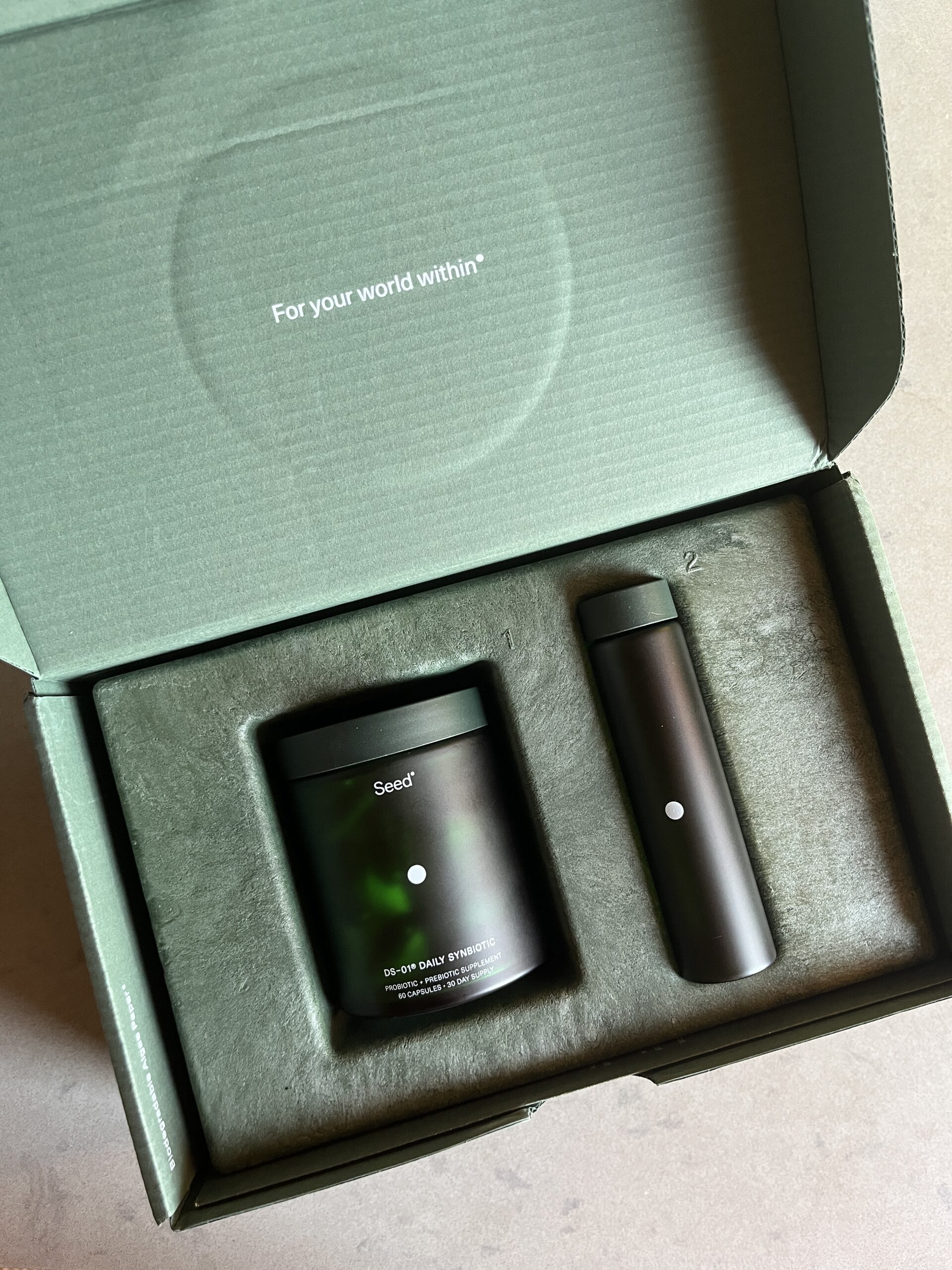
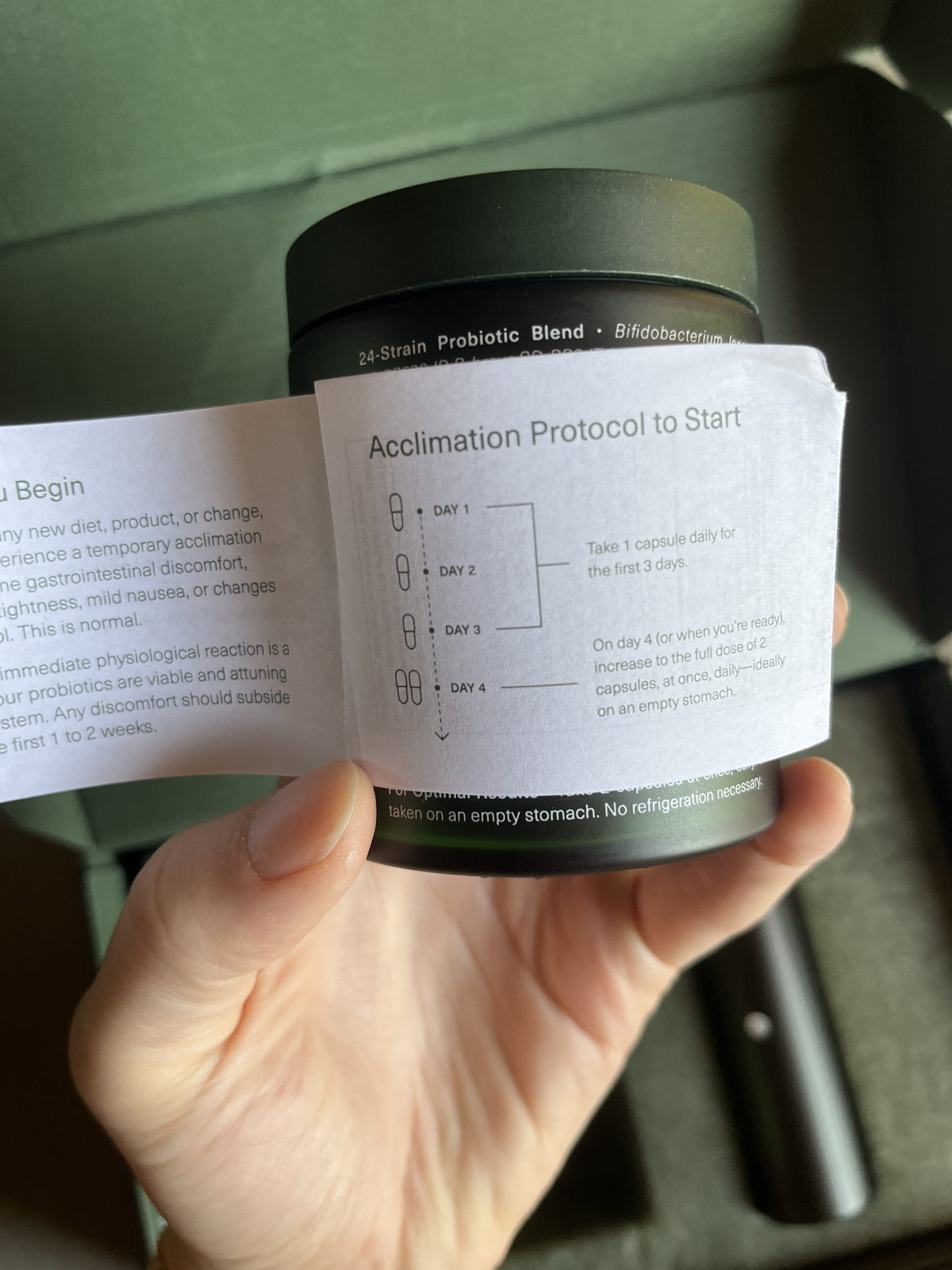
Seed’s acclimation protocol is as follows: Take one capsule for three days, and then take two capsules. Seed recommends you take your pills on an empty stomach — before eating or 2–3 hours after — to preserve the live cultures and make sure they reach your gut intact.
“Seed recommends you take your pills on an empty stomach — before eating or 2–3 hours after — to preserve the live cultures and make sure they reach your gut intact.”
I decided to take Seed first thing in the morning. I’d wake up, roll out of bed, take Seed, then take the dog on a walk so I had at least 10 minutes before returning home to make coffee and breakfast. Seed warns that, at first, you might notice some effects of the synbiotic hitting your system, like abdominal discomfort or changes in stool. In my case, I experienced very minor side effects that subsided by day 4. Here are my notes from the experience:
Day 1: Took it on an empty stomach, no noticeable results
Day 2: Forgot to take it in the AM, so I took it after breakfast. Experienced tightness in my upper abdomen and mid-back that felt like period pain.
Day 3: Final day of 1 pill per day — about 2 hours after taking it, post-breakfast, felt the period stomach where it feels like you need to poop but you don’t actually have to. Still, very mild!
Day 4: Moved up to 2 pills. I remembered to take it just as I was sitting down to breakfast, so I then had to wait 10 min! Grrr
I should note that Seed encourages you to take the pill with food, if it makes you more comfortable. And with the gentle yet potent formulation, I have no doubt that taking this with food would still provide benefits — though, eventually, I got into the habit of taking it first thing in the morning!
30 days taking Seed (and what happened when I went off)
In my 30 days with Seed, its effects were subtle yet surprisingly powerful. The intense bloating that had recently been bothering me subsided within the first week. I felt like I easily fit into my clothes which meant less angst around what I was eating. I started going to the bathroom in the morning without the help of coffee. (If you’re trying to quit coffee, this could be a fantastic routine to replace it and keep you regular! It’s also a good idea for travelers, too.)
“I didn’t think about Seed besides when I took it in the morning — in the best way.”
I even avoided numerous illnesses that I was exposed to socially, and while I can’t be sure that it was the Seed, I loved having it as another protective layer in my arsenal. If I forget to spray my Fend before heading into a potluck, then at least I’d taken my Seed.
Mostly, I didn’t think about Seed besides when I took it in the morning — in the best way. It added so much ease to my life and preserved my health from top to bottom. 😉 At the end of the 30 days, I went off Seed to test the effects against facing the world without Seed. I got a stye and had a breakout in the following 2 weeks — and I have a feeling that staying on Seed would have kept these at bay.
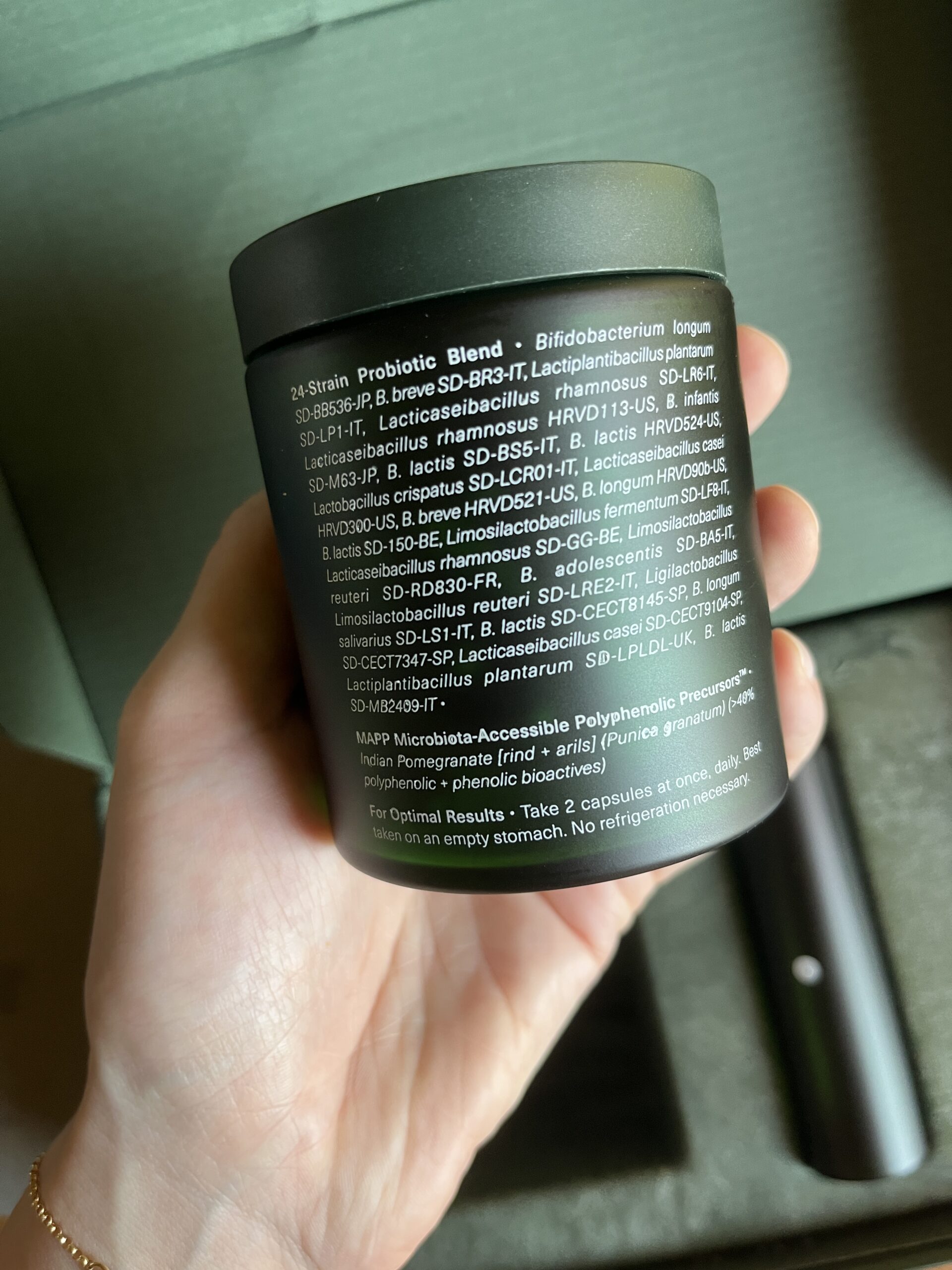
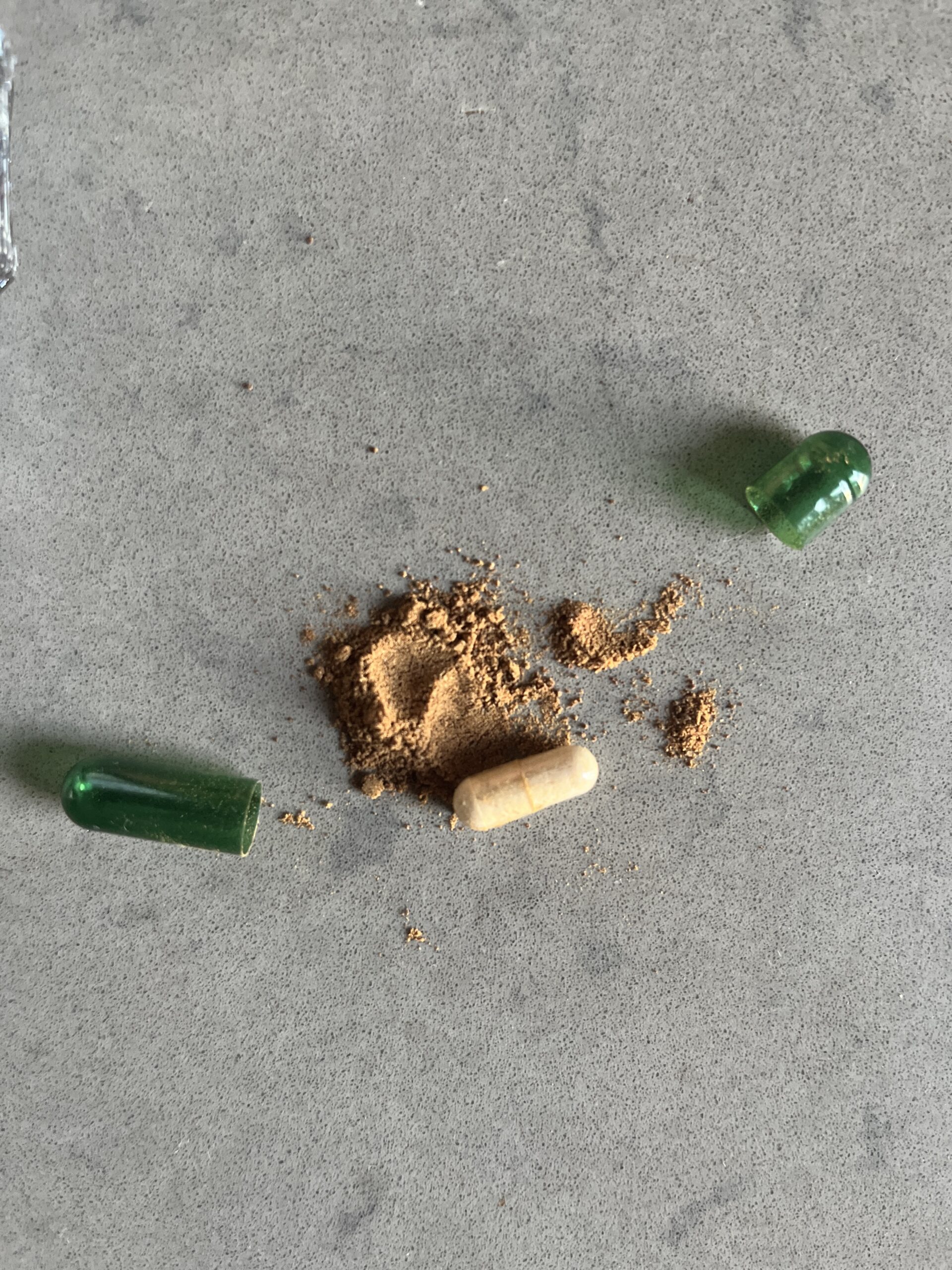
Should you try Seed’s new Co-Biotics?
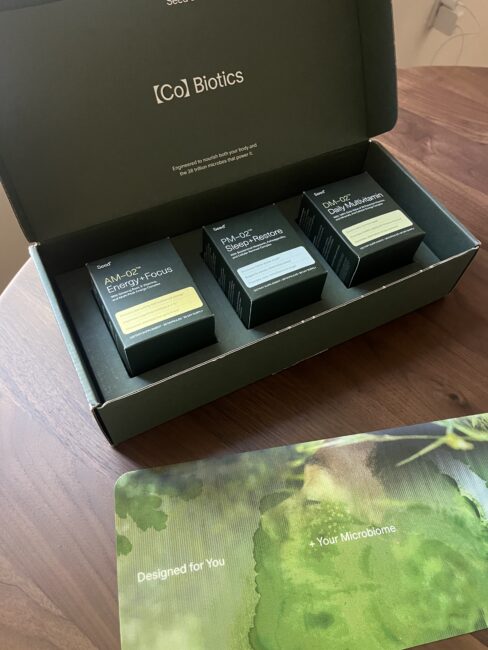
When Seed launched a line of Co-Biotics that includes their DM-02 Daily Multivitamin, AM-02 Energy+Focus, and PM-02 Sleep+Restore, I was eager to try them all out. My experience on the DS-01 was that it elevated my baseline health — so it made natural sense to complement that daily ritual with more focused support. All of these are engineered to be taken alongside the DS-01!
“My experience on the DS-01 was that it elevated my baseline health — so it made natural sense to complement that daily ritual with more focused support.”
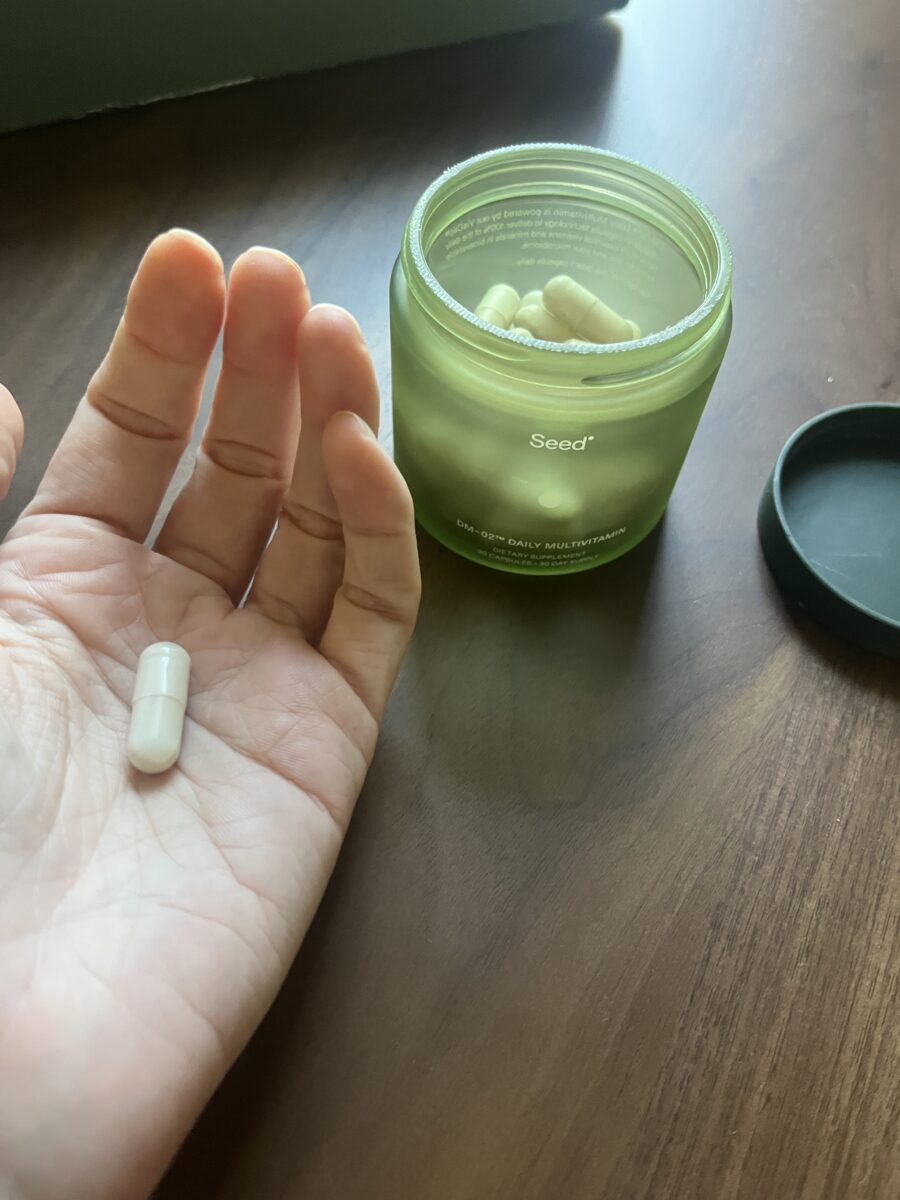
The Daily Multivitamin promises to deliver 100% of your daily value of 20 essential vitamins and minerals in a highly bioavailable form via their ViaCap. Here’s what’s included: vitamins A, C, D3, E, K1, zinc, selenium, copper, chromium, and molybdenum; microbiome support through B vitamins and prebiotics; and a cellular energy complex of CoQ10, PQQ, and spermidine. Since Seed is the expert on delivering essentials to your GI tract, the added nutrition is intended to truly sustain you and reach you where it matters.
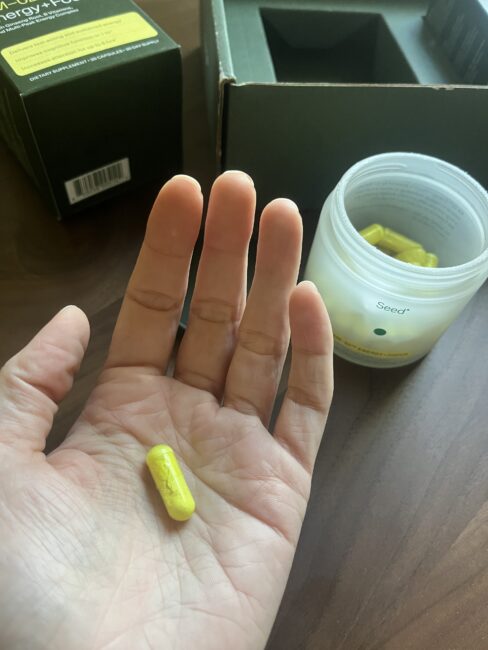
Now, for the fun stuff: AM-02 Energy+Focus and PM-02 Sleep+Restore. (I say this because the effects here are more immediately noticeable!) The AM-02 combines Ginseng Root, B Vitamins, and some fascinating ingredients, like Japanese wasabi root and the flower of the Japanese padoga tree (prebiotics that are also in the sleep product), to deliver sustained energy that’s also fast-acting. It is engineered to improve cognitive function within one hour and increase attention for up to six hours! I felt the effects on my first use, though I had the day off from work and was commuting and hosting my family. I’m excited to try it for mornings when I roll out of bed and get cracking on a long WFH day.
The PM-02 leverages 7-hour sustained-release melatonin alongside B Vitamins, ashwagandha, pre- and postbiotics, and other ingredients to support cellular renewal and restorative sleep. For those who are looking for a biologically identical dose of melatonin, this is your pill.
So, is Seed worth it?
Yes! I’m surprised at my own enthusiasm for Seed. The two pills of the DS-01 were so easy to incorporate into my routine and, at first, the effects were almost imperceptible. But in retrospect, I appreciated the ease that Seed added to my life and the extra protection I felt for my health.
“There’s no such thing as a magic pill, but Seed is close.”
Seed works on a subscription model so you’ll pay $49.99/30-day supply of the DS-01, and remember to hang onto the glass jar (and travel vial!) that comes with your first shipment. Since Seed aims for sustainability in their packaging, you’ll get refills for each month after your first. The Co-Biotics are a bit less, at $35 and $40 per month.
After my short stint off Seed, I’m planning to go back on, to keep myself healthy and protected. In my time off, I’ve realized there’s no such thing as a magic pill, but Seed is close.
Ashley D’Arcy is Senior Editor at The Good Trade. She is also a psychoanalyst-in-training and holds a Master’s in philosophy from the New School for Social Research. She lives in Brooklyn with her wife and their Miniature Australian Shepherd, Rocky.