

Can The Chirp Contour Help With Postpartum Back Pain? 2026 Review

Good Gear editors endorse products we’ve personally researched, tested, and genuinely love. Learn more about our methodology and business model here.
GOOD GEAR RATING — 10/10 STARS
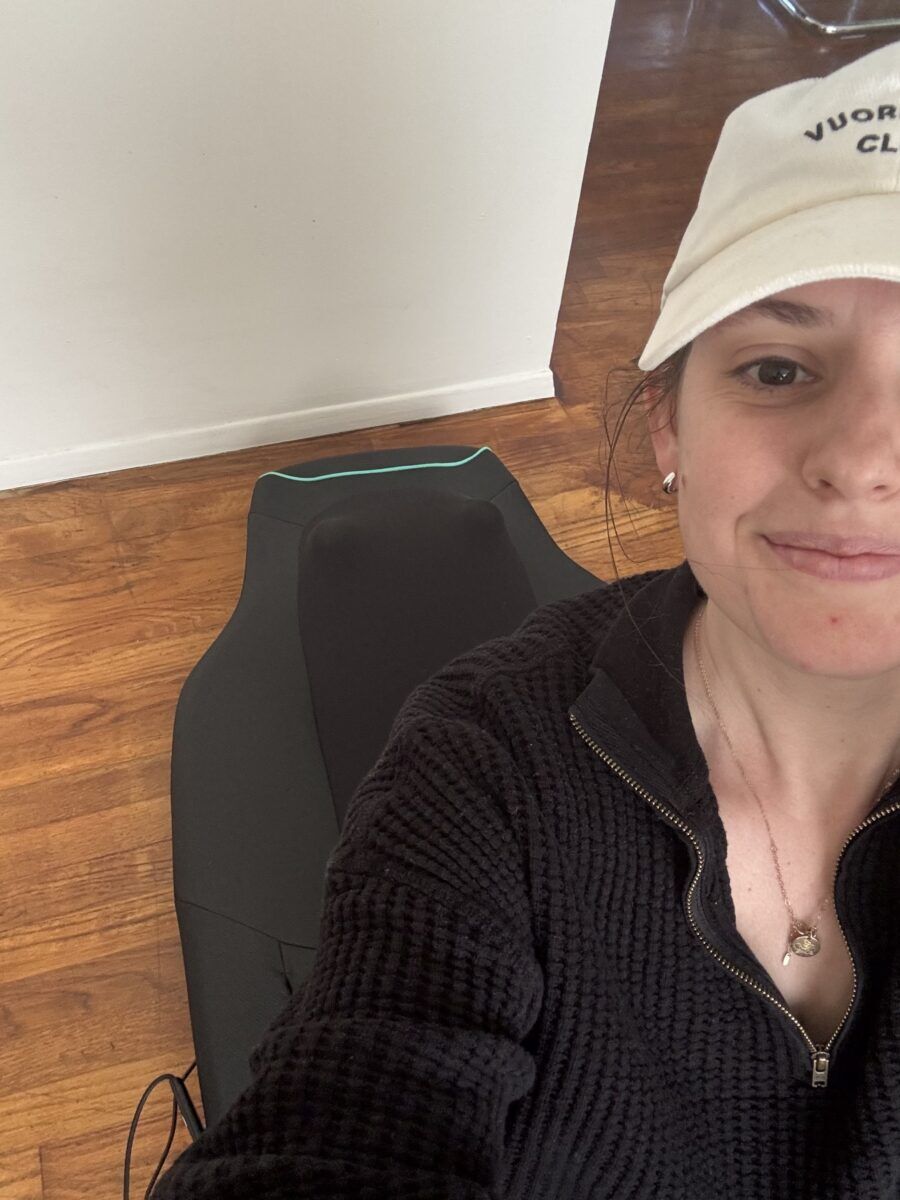
Summary: I started using the Chirp Contour during postpartum recovery after months of lower back pain from pregnancy, carrying a baby, and years of general wear and tear on my body. After using it consistently for 30 days, it became one of the few at-home recovery tools I actually looked forward to using. The combination of decompression, massage, and heat therapy brought immediate relief to my lower back tension and stiffness, especially after long days of diaper changes, lifting a car seat, and working at a desk. While it won’t replace medical care or physical therapy, it’s helped me manage everyday pain in a way that feels realistic, convenient, and surprisingly relaxing.
What I loved:
- The Chirp is only 22 pounds, has a carry handle for easy transport, and is flat enough to slide under the bed.
- The interchangeable rollers let you customize the intensity depending on how sore or sensitive you feel.
- It comes fully assembled and ready to use out of the box.
- The saved user profiles are helpful for multiple users.
- The device is FSA/HSA-eligible, comes with free shipping, and includes a 1-year warranty (plus a 30-day at-home trial).
- The company offers discounts to military and first responders.
Things to consider:
- The price is an investment ($550) and may feel hard to justify upfront (though watch for sales and discount codes).
- While compact compared to similar recovery devices, it still requires floor space to be used comfortably.
- There’s a slight learning curve with the controls and settings during the first few sessions.
- It provides temporary relief rather than permanently fixing chronic pain, so consistency is important.
Ten months ago, I had a baby. Years before that, though, I started having lower back pain due to long hours hunched over my desk for grad school and work, workouts, backpacking trips, and many summers of tent camping. Pregnancy and postpartum simply pushed things over the edge (or, rather, became the straw that broke the camel’s back).
Between constant diaper changes, lifting a car seat in and out of the car, carrying a growing baby on one hip, and spending hours bent over a crib, I reached a point where I realized I needed to take recovery more seriously, especially since I’m only in my mid-30s.
The problem is that recovery can quickly become a full-time job in itself. I’ve spent a lot of money on physical therapy, chiropractic care, and massages over the years, and while all of them help, it’s hard to consistently make appointments while working full-time and caring for a baby. It’s also expensive. And in the 2026 economy, when diapers, formula, and groceries somehow cost more and more every month, there’s very little room for “wellness” spending, even if it makes a difference.
So when I discovered the Chirp Contour — a compact decompression and massage table designed for at-home back relief — I was intrigued. After doing the math, I realized it could pay for itself after a relatively small number of skipped massage or chiropractic appointments. The fact that it’s FSA/HSA-eligible makes it feel even more like an investment rather than another wellness impulse purchase.

So, what is the Chirp Contour?
Chirp launched in 2015 with a focus on recovery and pain-relief products, most notably its popular back rollers, which have developed something of a cult following online. The Contour is the brand’s larger recovery device: a compact, foldable massage table designed to combine spinal decompression, massage therapy, and heat therapy into one at-home system.
What immediately stood out to me was the size. Unlike many recovery devices that permanently take up an entire corner of your house, the Contour weighs 22 pounds and is flat enough to slide under a bed or tuck behind a couch. As someone who lives in a cozy 2-bedroom rental with a baby that has overtaken every square foot, that alone feels like a huge advantage.
The design is also incredibly simple. There’s an easy-access latch system that lets you swap out the rollers, plus a remote control that slides into a side pocket while you’re lying down so you’re not awkwardly fumbling around mid-session (or losing it in-between sessions).
The device centers around three core features:
- Spinal decompression through Chirp’s DiscLift™ system
- Massage therapy through interchangeable rollers
- Heat therapy for muscle relaxation
Additionally, there are three roller options depending on how intense you want the massage to feel:
- Soft
- Contour
- Deep tissue
The Contour also uses BackTrack™ Technology, which adjusts the positioning based on your height so the pressure hits the right areas. It works for users between 5 feet and 6’5”, making it practical for households where multiple people want to use it. For reference, I’m 5’3”.

My experience using the Chirp Contour for 30 days
The Contour arrives essentially ready to use right out of the box, which I appreciated because postpartum patience for complicated assembly instructions is extremely limited.
There is somewhat of a learning curve with the settings, but after a few sessions, it becomes intuitive. I love how the device also lets you save two user profiles — so great if you’re sharing it with a partner and don’t want to reconfigure everything each time.
Almost immediately, the standout feature for me was the heat therapy. I’m someone who constantly uses heating pads, and honestly, one of my favorite parts of visiting the chiropractor has always been lying on the heated table before an adjustment even starts. The Contour offers two heat levels, and the warmth combined with the rolling massage made my muscles noticeably relax within minutes during my first session.
Over the course of 30 days, I used the Contour about two to three times a week, usually at the end of the day after hours of lifting, bending, and carrying my daughter around. The biggest thing I noticed wasn’t necessarily permanent pain elimination — because let’s be honest, parenting a baby is basically a repetitive strain injury — but rather immediate and consistent relief. The decompression feature works by gently stretching the spine using gravity and the DiscLift™ system, which feels like your back is slowly being opened up and lengthened.
After each session, my back felt looser, less compressed, and significantly less stiff. It especially helped with that deep lower back tightness that builds up after spending too much time bent over a changing table or sitting in awkward nursing positions. (Note that the deep tissue is intense. I’m not sure if I’m just sensitive, but it’s definitely a “hurts so good” sort of experience.)
What I appreciated most is that the Contour feels designed for everyday pain relief rather than elite athletic recovery. You don’t need to be training for a marathon to benefit from it. If anything, it feels made for people whose bodies are simply tired from life: parents, desk workers, people on their feet all day, or anyone dealing with chronic stiffness.
Chirp has also said that users with conditions including sciatica, arthritis, stenosis, herniated discs, pulled muscles, and tension-related headaches have reported positive experiences with the device. While I can’t speak to those conditions myself, I can say that it genuinely helped me manage postpartum back pain in a way that has felt sustainable and easy to maintain at home.
The downsides
The biggest downside is — no surprise — the price. The Contour is absolutely an investment piece, and it’s not the kind of purchase most people make casually. That said, I kept comparing it to the ongoing cost of appointments. A single massage in my area can easily cost over $100, and chiropractic sessions add up quickly, too. If you’re someone already spending consistently on bodywork or recovery treatments, the math starts making more sense.
The other thing worth noting is that, while the Contour is compact for its size, it’s still a large recovery device. You do need enough floor space to use it comfortably, even if it stores away relatively easily afterward.
My final thoughts
What surprised me most about the Chirp Contour is that it actually became part of my routine instead of turning into another wellness gadget collecting dust in the corner of my home.
A lot of recovery devices sound great in theory, but end up feeling too complicated, too bulky, or too time-consuming to use consistently. The Contour is different. I can set it out, do a quick session while my daughter naps or while I listen to a podcast, and put it away again without it becoming an ordeal.
It’s not a miracle cure, and it won’t replace medical care or physical therapy if you need more serious treatment. But for everyday back tension, postpartum soreness, and the physical wear and tear of modern life, I found it genuinely helpful.
Most importantly, it made me feel better in my body during a season of life when my body has been asked to do a lot. That alone is more than worth it.
Kayti Christian is a Senior Content Strategist at The Good Trade. With an MFA in Nonfiction Creative Writing, her work has appeared in TODAY, Shondaland, and The New York Times. Since 2017, Kayti has been uncovering and reviewing the best sustainable home brands and wellness products. Her personal journey through four years of fertility treatments has inspired her to write extensively about women’s healthcare and reproductive access. Beyond her work at The Good Trade, Kayti is the creator of phone notes, a Substack newsletter with 7,000 subscribers, and the cohost of the FriedEggs Podcast, which delves into IVF and infertility.


